
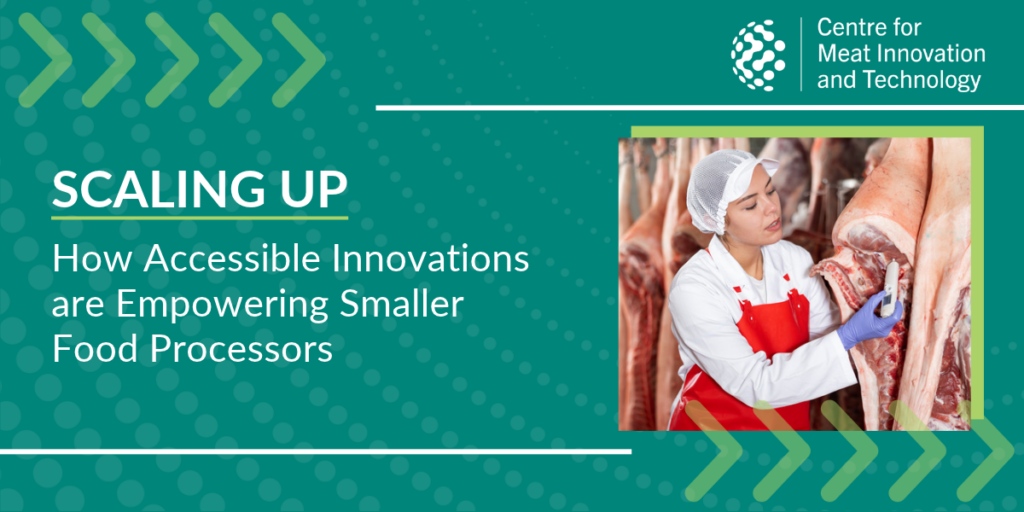
How Accessible Innovations are Empowering Smaller Food Processors
By Daphne Nuys-Hall, Technical Director, Meat & Poultry Ontario
For many small and medium-sized meat processors in Ontario, the idea of adopting new technology can feel overwhelming. Tight margins, labour shortages, regulatory requirements, and aging infrastructure often leave little room for major investments or operational disruptions. Yet technology is no longer something reserved for large multinational facilities. Today, practical and scalable innovations are becoming increasingly accessible to smaller processors and are helping plants improve food safety, efficiency, traceability, and competitiveness.
The key is not adopting every new piece of equipment or software available, but identifying technologies that solve real operational challenges.
One of the biggest drivers of technological adoption in Ontario meat processing is labour. Across the industry, plants continue to struggle with recruitment and retention. Automation can help reduce repetitive manual tasks while improving consistency and productivity. For smaller facilities, automation does not necessarily mean installing fully robotic production lines. In many cases, simple upgrades such as automated packaging equipment, conveyor systems, portioning tools, or labelling systems can significantly reduce labour demands and improve throughput.
For example, automated weighing and labelling systems can reduce human error and improve traceability accuracy. Vacuum packaging machines with programmable settings can create more consistent seals and extend shelf life while reducing packaging waste. Even small investments in powered lifting equipment or ergonomic handling tools can improve worker safety and reduce fatigue-related injuries.
Digital recordkeeping is another area where small and medium processors can benefit immediately. Many facilities still rely heavily on paper-based HACCP records, sanitation logs, temperature checks, and maintenance documentation. While paper systems can work, they are time-consuming to manage and difficult to analyze for trends or recurring issues.
Digital food safety systems allow plants to record information electronically using tablets, mobile devices, or cloud-based software. Temperature monitoring systems can automatically log cooler temperatures 24 hours a day and send alerts if limits are exceeded. Electronic sanitation checklists can improve accountability and ensure records are complete and legible. Digital systems also simplify document retrieval during audits, inspections, and traceability exercises.
Importantly, digital transformation does not need to happen all at once. Many successful processors start with one area, such as digital temperature monitoring or electronic HACCP forms, and expand gradually over time.
Traceability technology is becoming increasingly important as both regulators and customers expect faster access to product information. Under the Safe Food for Canadians Regulations (SFCR), processors must be able to trace products one step forward and one step back in the supply chain. For plants handling multiple species, custom slaughter, or wholesale distribution, maintaining accurate records can quickly become complex.
Barcode systems, QR codes, and digital lot tracking software can help simplify traceability and reduce recall risk. Rather than manually searching through paper invoices and production logs, processors can retrieve product movement information within minutes. Faster traceability not only supports regulatory compliance but also helps protect brand reputation during incidents or recalls.
Another growing area of innovation is the use of smart sensors and monitoring equipment. Wireless temperature probes, humidity sensors, and automated alarm systems allow plants to monitor environmental conditions continuously. This technology can reduce product loss, identify equipment failures early, and provide better documentation for preventive control plans.
Preventive maintenance software is also becoming more common in food facilities. Rather than waiting for equipment to fail, processors can use digital scheduling systems to track maintenance activities and service intervals. This approach reduces downtime and can extend the lifespan of costly equipment.
Food safety itself is also benefiting from advances in technology. Modern equipment is increasingly designed with sanitation and hygienic design principles in mind. Smooth welds, cleanable surfaces, and improved drainage reduce areas where bacteria can accumulate and make sanitation more effective. Upgrading older equipment may improve not only efficiency but also the overall cleanability of the facility.
Vision systems and artificial intelligence are also beginning to enter food processing environments. While some advanced systems may still be out of reach for smaller facilities, affordable camera-based inspection systems are becoming more available. These technologies can assist with detecting packaging defects, verifying labels, or monitoring production consistency.
Of course, technology adoption comes with challenges. Cost remains one of the largest barriers for smaller processors. However, not every improvement requires a major capital project. Many facilities benefit from phased implementation strategies, focusing first on technologies that provide the quickest operational or food safety returns.
Training is another critical factor. Technology is only effective if employees understand how to use it properly. Successful implementation requires employee involvement, clear procedures, and ongoing support. Plants that involve staff early in the process often experience smoother transitions and stronger employee buy-in.
Cybersecurity and data management are also becoming more important as facilities adopt digital systems. Processors should work with reputable vendors and ensure electronic records are properly backed up and protected. Even basic cybersecurity practices, such as password protection and regular software updates, can reduce risk.
Government funding programs and industry support initiatives may also help offset costs. Federal and provincial programs periodically offer grants or cost-sharing opportunities for technology adoption, productivity improvements, food safety upgrades, and workforce development. Industry associations and equipment suppliers can also provide guidance on selecting practical solutions suited to smaller operations.
Ultimately, technology adoption is not about replacing people. It is about supporting employees, improving consistency, strengthening food safety systems, and helping Ontario processors remain competitive in a rapidly evolving industry.
Small and medium meat processors play a critical role in Ontario’s food supply chain, serving local communities, supporting farmers, and providing regional food security. By taking a practical and gradual approach to innovation, these businesses can adopt technologies that fit their operations, budgets, and long-term goals.
The future of meat processing will continue to involve more automation, better data, and smarter systems. For Ontario processors, the question is no longer whether technology will shape the industry, but how facilities can adopt the right tools to build safer, stronger, and more sustainable operations for the years ahead.